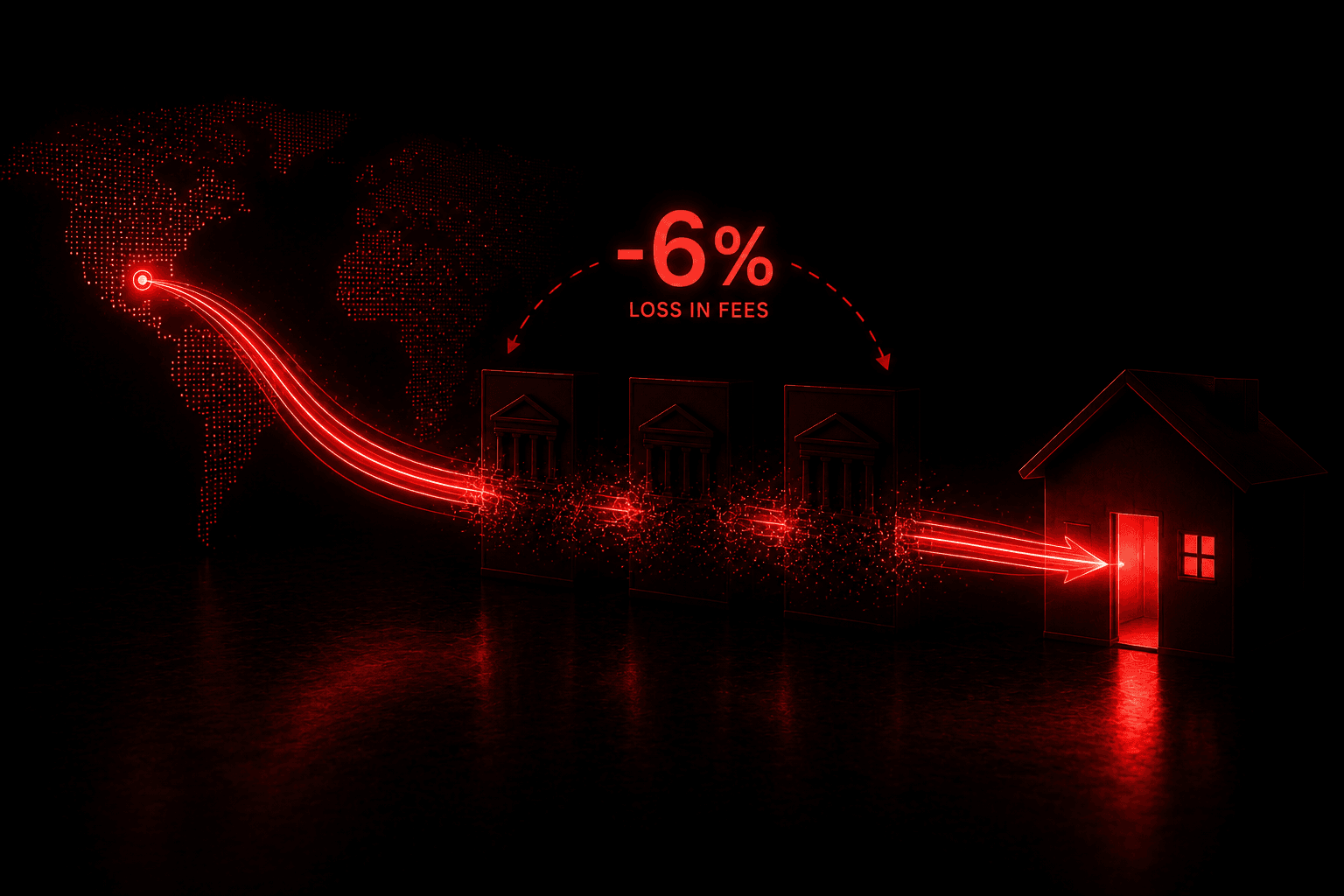
The internet economy has a payment problem
Here is what the internet economy needs.
Developers paying by the millisecond for compute. Readers paying small amounts for individual articles. Creators receiving direct payments from audiences. AI services charging per API call. Machines settling transactions autonomously.
The demand for all of this is growing, but the infrastructure isn't there yet. Legacy payment systems (cards, bank transfers) were built for offline, account-based transactions. They handle large, infrequent payments well enough. For everything described above, they either work poorly or don't work at all. So these models exist today only as workarounds: bundled subscriptions substitute for per-article payments, flat-rate API tiers substitute for per-call pricing, and intermediaries get inserted into flows that should be direct.
These gaps are structural:
- Micropayments do not work because processing fees often consume the entire payment.
- Streaming payments aren't possible: money moves in separate, one-off transactions, not a continuous flow.
- Cross-border transfers are slow and expensive because the system was designed this way.
- Automated machine-to-machine payments need workarounds and intermediaries.
- Payment logic cannot be built directly into software without relying on a third-party processor.
This gap remains unsolved.
What blockchain technology made possible
Blockchain technology, starting with Bitcoin in 2009, introduced something that didn't previously exist: a way to transfer value between parties over the internet without any intermediary involved in the settlement.
This is a fundamental capability. Payment logic can live inside software. Settlement can be programmable. Two parties who have never met and don't trust each other can exchange value with cryptographic certainty.
Bitcoin proved that value could be transferred online without intermediaries. Ethereum showed how programmable logic could be added to decentralized networks. These became the foundation for what came next.
Bitcoin and Ethereum opened a design space. Filling it with payment infrastructure was a separate task. Payment-focused blockchains require predictable low fees, high throughput, security, staking that doesn't require locking capital, and sustainable economics. None of the existing networks was built with these as the main priorities.
Infrastructure built specifically for payments still doesn't exist.
What building for payments requires
Building a payment-focused blockchain requires different design choices, guided by the goal of supporting payments.
A few of the requirements that matter most:
Predictable, low transaction costs
Payment systems need predictable fees. A business building on a payment network needs to know what transactions will cost, reliably enough to plan product economics.
Fee auctions cause unpredictable fees that spike with congestion. This can work for infrequent, high-value transactions. It's a problem for payments.
Staking that doesn't require locking capital
Staking often requires locking up capital, which limits participation to large providers. This concentrates influence and reduces decentralization.
A payment network needs broad validator participation. Staking shouldn't force participants to choose between earning rewards and keeping their capital liquid.
Long-term cryptographic security
A payment network is infrastructure. Infrastructure operates over decades. The cryptographic assumptions built into a network in 2025 will still need to hold in 2040.
Most networks use elliptic curve cryptography, which may be vulnerable to future quantum threats. Planning for this is uncertain, and that's not enough for long-term use.
Economics that don't rely on inflation
Proof-of-Stake networks often issue new tokens to reward validators. This dilutes existing holders and creates tension between holders and validators.
Payment infrastructure that is both a store of value and a transaction medium needs an economic model where those two functions don't conflict.
Throughput that scales with demand
Payment networks need to scale to handle high transaction volumes without artificial limits or expensive hardware. Both can cause congestion or centralization.
What eCurrency was designed for
eCurrency is a blockchain protocol built from the ground up for these requirements. It launched in 2018 as a legacy Proof-of-Work network and has since moved fully to Proof-of-Stake. Its current fixed supply is 316,219,273 ECR. Each core design decision matches a payment infrastructure requirement.
UTXO-native Proof-of-Stake
eCurrency uses a UTXO model, with atomic value movement and no account-style global state. Consensus is based on stake weight from UTXO value and age, with no capital lockup. Validators can earn rewards while keeping their capital liquid.
Fee-share and Reward Fund model
Validators earn a direct share of each block's transaction fees, plus a subsidy from the network's Reward Fund. The fund is capitalized by transaction fees and the migration fee paid when legacy coins move to the PoS chain. This keeps validator compensation stable even when fee volume is low. The protocol allows one zero-fee transaction per block, though a validator earns no reward for a block containing only that transaction.
Reward Fund smoothing
A routed portion of transaction fees is collected into the Reward Fund and distributed to validators as a steady subsidy alongside their direct fee share. This smooths returns and keeps validator security funded by usage.
Native post-quantum cryptography
eCurrency uses Falcon for all transaction signing, a lattice-based signature scheme selected by NIST for post-quantum standardization. Falcon replaces classical elliptic-curve signatures across the protocol.
What becomes possible
These design choices matter because they make new things possible in practice. Content micropayments only work if transaction costs are low enough for the payment to make sense. That means predictable, low fees that don't spike under load.
Streaming payments, continuous value transfer for things like per-second compute or per-unit bandwidth, are possible with eCurrency's UTXO model.
Machine-to-machine payments, where autonomous systems exchange value without human involvement, need payment logic built directly into software, with predictable costs and reliable settlement. eCurrency's Client-Side Smart Contract model moves computational complexity off-chain while keeping cryptographic enforcement on-chain, without the overhead of a global virtual machine. Cross-border transfers can draw on the same properties: 10-second block times and a fee-share model designed to keep costs predictable regardless of transaction size.
Where eCurrency stands today
eCurrency is a live network. The protocol's core architecture (consensus mechanism, post-quantum cryptography, economic model) is stable and production-ready. Current development focuses on the ecosystem layer: wallet infrastructure, developer tools, exchange liquidity, and the asset issuance framework for building on the protocol.
Infrastructure projects succeed through adoption, and adoption takes time. Many internet protocols were technically sound years before they became essential to the economy. The foundational work comes first.
The internet's payment layer is still being built. eCurrency was built from the requirements of payments. Explore the technical architecture at ecurrency.org, or read the eCurrency Whitepaper for a full account of the protocol design.